
OpenAI Rejects Another Math Prize, This Time Justin Sun's $1 Million
OpenAI refused $1 million for its AI math proof. Justin Sun now lists the same problem, and the claim sits open.
 BeInCrypto•Lockridge Okoth17 Sept
OpenAI refused $1 million for its AI math proof. Justin Sun now lists the same problem, and the claim sits open.
BeInCrypto•Lockridge Okoth17 Sept
Geneva, Switzerland — September 16, 2026 — The Office of Justin Sun today announced the establishment of the Justin Sun Prize, a zero-trust, decentralized academic bounty mechanism based on a “problem list,” with breakthroughs in fundamental disciplines and machine formal verification as the criteria for awarding prizes, and a top prize of up to US$1
BeInCrypto•Advertorial16 Sept
Geneva, Switzerland — September 16, 2026 — The Office of Justin Sun today announced the establishment of the Justin Sun Prize, a zero-trust, decentralized academic bounty mechanism based on a “problem list,” with breakthroughs in fundamental disciplines and machine formal verification as the criteria for awarding prizes, and a top prize of up to US$1 million for a single problem. The prize seeks to redefine scientific rewards in the AI era and accelerate fundamental scientific research through collaboration between humans and AI. The first list of Justin Sun Prize winners was also announced, recognizing solutions and formalized proofs involving 66 mathematical problems. The top prize, worth US$1 million, was awarded to the OpenAI research team in recognition of its solution and formalized proof for the Existence and Smoothness of the Three-Dimensional Navier–Stokes Equations problem. According to information published by OpenAI, the relevant proof was produced by its internal model, and the Lean formalization and verification were completed by GPT‑6 Astra. This problem concerns the Navier–Stokes equations, which describe the motion of fluids and are commonly abbreviated as the N–S equations. The equations were developed in the 19th century by French physicist Claude-Louis Navier, Irish-born British mathematician George Gabriel Stokes, and others, and have a history of approximately two hundred years. In 2000, the Clay Mathematics Institute listed the Navier–Stokes Existence and Smoothness problem as one of the seven Millennium Prize Problems and offered a US$1 million reward for its solution. The Justin Sun Prize does not use traditional nominations or credential thresholds as barriers to entry, nor does it operate on a four-year cycle or the rhythm of lifetime achievement. Instead, it ties the prize directly to mathematical problems and machine-verifiable formalized proofs. Anyone can receive the prize as long as they are the first to achieve a qualifying breakthrough. The vision of the Justin Sun Prize is to become the “Nobel Prize of the AI Era,” responding to the profound transformation of scientific research and incentives in the new era in a more decentralized, formalized, and machine-driven way. The repository of mathematical problems and formalized code will be maintained and publicly updated on an ongoing basis. Once a problem is listed, it is locked in: problems can be added only, never removed; awarded prize funds do not need to be returned under any circumstances. The current problem list already includes formal verification of the Poincaré Conjecture, the Riemann Hypothesis, Goldbach’s Conjecture, and a large number of unsolved problems proposed during the lifetime of the late mathematician and Wolf Prize laureate Paul Erdős. In addition to the prize, winners will also receive a certificate and a medal. The edge of the medal is inscribed with the Latin phrase “Quod probatur, solvitur,” meaning “Proved, then paid.” The Justin Sun Prize adheres to three core principles: openness, public benefit, and open source. It is open to all eligible contributors, with no restrictions based on nationality, institution, or identity, and makes no distinction between humans and AI; funds are used exclusively for prize awards and open initiatives and are not intended for profit; the problem list, confirmation standards, proofs, and verification materials are all made available to the public through GitHub, while prize disbursement records are recorded on-chain for permanent traceability and immutability. “An award named after a person is the least political thing in the world,” said Sun. “More importantly, it gives me an answer to myself—my wealth is rooted in mathematics. It came from mathematics, and it will return to mathematics.” According to public records, Sun has donated more than US$45 million across technology, environmental protection, disaster relief, and other fields. The Justin Sun Prize will become a central focus of Sun’s philanthropic efforts, continuing to support breakthroughs in fundamental science through an open and verifiable model. The prize will be paid out in either USDT on TRON (TRC-20) or USDC on Ethereum (ERC-20) based on the recipient’s choice. For more information, please visit www.hejustinsun.com/prize. About the Office of Justin Sun The Office of Justin Sun supports Justin Sun’s global business, philanthropic and public initiatives across technology, blockchain, artificial intelligence, scientific research, investment, art and space exploration. Justin Sun is the Ambassador and former Permanent Representative of Grenada to the World Trade Organization and the Founder of TRON. TRON is the leading blockchain for the stablecoin revolution, processing over $13 trillion in volume since its inception. In the world’s emerging markets, people rely on USDT on TRON to access the global financial system. A protégé of Alibaba founder Jack Ma, Sun has been recognized internationally for his work in the digital asset industry, including a Forbes cover profile in April 2025 and multiple appearances on the Forbes 30 Under 30 list. In August 2025, he flew aboard Blue Origin’s NS-34 mission, becoming the 712th person in history to travel to space. His broader interests span technology, investment, philanthropy, art, gaming, and space exploration. Office of Justin Sun Contact: info@hejustinsun.com About Justin Sun Prize The Justin Sun Prize is an academic initiative established by Justin Sun to support advances in mathematics, formal verification, and AI-assisted scientific discovery. The prize is decentralized and built around the principle that mathematical work should be judged by the strength, rigor, and verifiability of the proof itself, not the prestige or reputation of those submitting it. Justin Sun established the prize in his own name as a long-term commitment to return wealth created through mathematics and technology back to mathematics itself. Its legacy is intended to be defined by the body of work it recognizes and the laureates whose discoveries stand the test of time. The prize links clearly defined mathematical challenges to machine-verifiable proof. Its guiding principles are openness, public benefit and open-source access. Visit https://www.hejustinsun.com/prize for more information. Contact: thejustinsunprize@hejustinsun.com
 NewsBTC•BlockmanPR16 Sept
Geneva and Lisbon, Sept. 12, 2026 – TRON DAO (“TRON”) and Ethena Labs (“Ethena”) today announced that USDe and sUSDe are live on the TRON network, expanding access to Ethena’s digital dollar products across one of the world’s largest stablecoin settlement networks. Users can now bridge USDe and sUSDe to TRON through Stargate Finance and hold or transfer both assets across the network. Support across TRON’s core DeFi applications, including JustLend DAO and SUN.io, is expected to roll out over the coming weeks, with broader adoption across wallets, exchanges, and payment applications to follow. USDe on TRON will also remain connected to liquidity across Ethena’s other supported networks, supporting interoperability across Ethena’s broader multichain ecosystem. USDe brings an additional dollar-denominated asset to TRON, while sUSDe gives TRON’s global user base exposure to Ethena’s rewards-bearing digital dollar product. In turn, Ethena connects with TRON’s global base of over 403 million accounts, where dollar-denominated assets already move at significant scale. “Millions of people rely on the TRON network every day to make payments, save, and move value globally,” said Justin Sun, Founder of TRON. “Bringing USDe and sUSDe to TRON broadens the options available to users and further strengthens the network as decentralized infrastructure for everyday use.” “TRON has a massive user base that already holds and moves digital dollars in significant size,” said Guy Young, Founder of Ethena Labs. “Bringing USDe and sUSDe to that ecosystem means those users can hold a dollar that accrues rewards on the network they already use. This integration is the latest step in our effort to bring our digital dollar products to as many people as possible, and we look forward to continuing to work with the TRON DAO team to find new ways to bring value to TRON’s users.” The integration marks the latest step in USDe’s multichain expansion, with the asset now supported across more than a dozen networks and integrated with leading centralized exchanges and DeFi applications. About Ethena Labs Ethena Labs is the development team behind USDe and USDtb and a contributor to the Ethena protocol. Ethena’s USDe is the fastest growing USD-denominated crypto asset in history, encompassing integrations across some of the largest centralized exchanges and major DeFi applications. Ethena is backed by Fidelity, Franklin Templeton, Dragonfly, Binance Labs, Bybit, and OKX among others. Media Contact Nate Johnson Ethena-August@AugustCo.com About TRON DAO TRON DAO is a community-governed DAO dedicated to accelerating the decentralization of the internet via blockchain technology and dApps. Founded in September 2017, the TRON blockchain has experienced significant growth since its MainNet launch in May 2018. Today, TRON hosts the largest circulating supply of USD Tether (USDT) stablecoin, which currently exceeds $94 billion. As of September 2026, the TRON blockchain has recorded over 403 million in total user accounts, more than 15 billion in total transactions, and over $28 billion in total value locked (TVL), based on TRONSCAN. Recognized as the global settlement layer for stablecoin transactions and everyday purchases with proven success, TRON is “Moving Trillions, Empowering Billions.” TRONNetwork | TRONDAO | X | YouTube | Telegram | Discord | Reddit | GitHub | Medium | Forum Media Contact Yeweon Park press@tron.network
NewsBTC•BlockmanPR12 Sept
Tron founder Justin Sun confirms the launch of the first-ever U.S. spot ETF, offering investors traditional access to TRX on the Chicago Board Options Exchange, Cboe.
 U.Today•Caroline Amosun9 Sept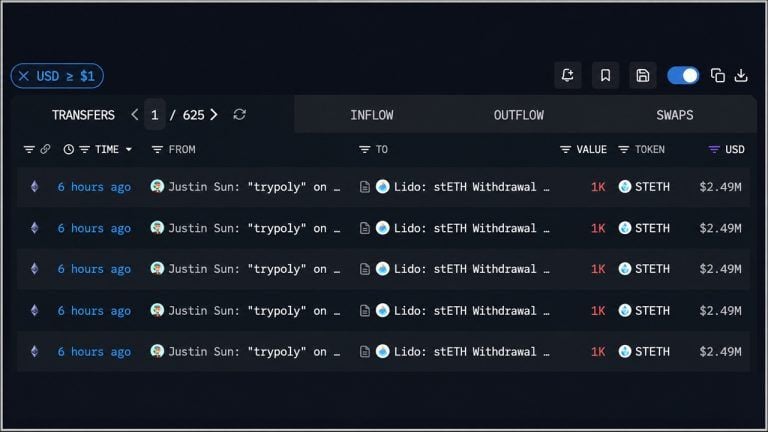
Tron founder Justin Sun has redeemed 10,000 ETH from Lido since Aug. 26, and roughly $12.3 million of it has already landed on Poloniex, an exchange he backs. The Trail Since Aug. 26 Onchain analysts flagged the latest step on Tuesday: a wallet cluster attributed to Sun requested the unstaking of another 5,000 ETH from […]
 Bitcoin.com News•Shiraz Jagati8 Sept
In his latest unhinged outburst, Justin Sun offered to have his height measured on a livestream so people would stop calling him short.
 Protos•Cas Piancey3 Sept
Justin Sun has reached out to the Chinese 'troll king' as part of his escalating public feud with his ex over reproductive disputes.
Protos•Cas Piancey1 SeptJustin Sun says Forbes and Bloomberg cut 70-80% off his net worth. He explains why he will never cash out.
BeInCrypto•Phil Haunhorst1 Sept
Justin Sun says an AI told him not to pay $50 million. CZ says the fight belonged in court, not online.
BeInCrypto•Mohammad Shahid28 Aug
Justin Sun's X post in which he accused Chinese actress Jing Tian of reneging on a cash-for-eggs deal has caused waves in China.
Protos•Cas Piancey28 Aug
Justin Sun is claiming that he wined and dined Jing Tian and offered her 30 million yuan for her eggs before she welched on the deal.
Protos•Mark Toon27 Aug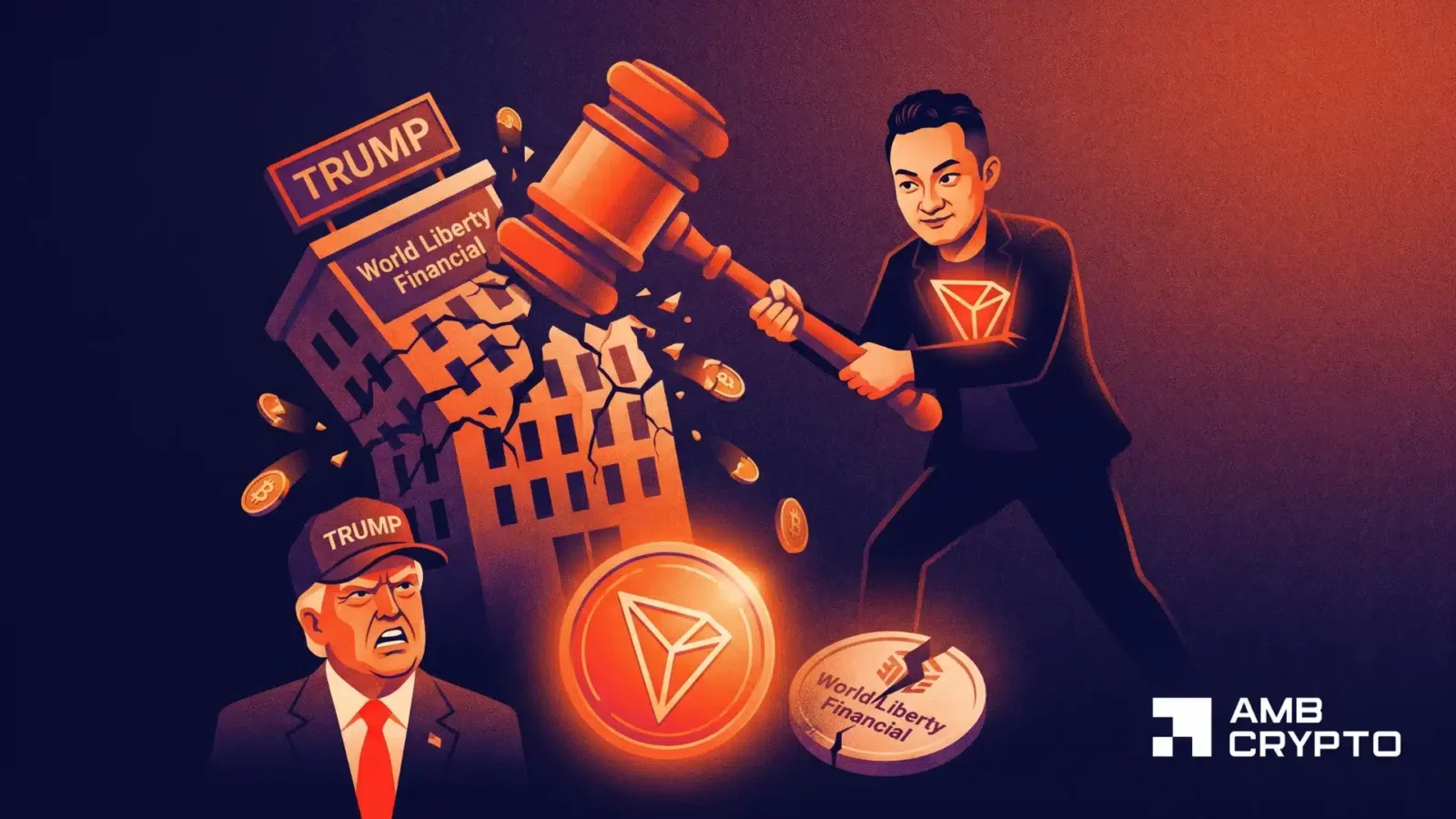
Why is the Tron founder warning investors about WLF and USD1?
 AMBCrypto•Ishika Kumari23 Aug
The lawsuit highlights the critical need for transparency and trust in crypto governance, potentially influencing future regulatory frameworks.
 CryptoBriefing•Editorial Team22 Aug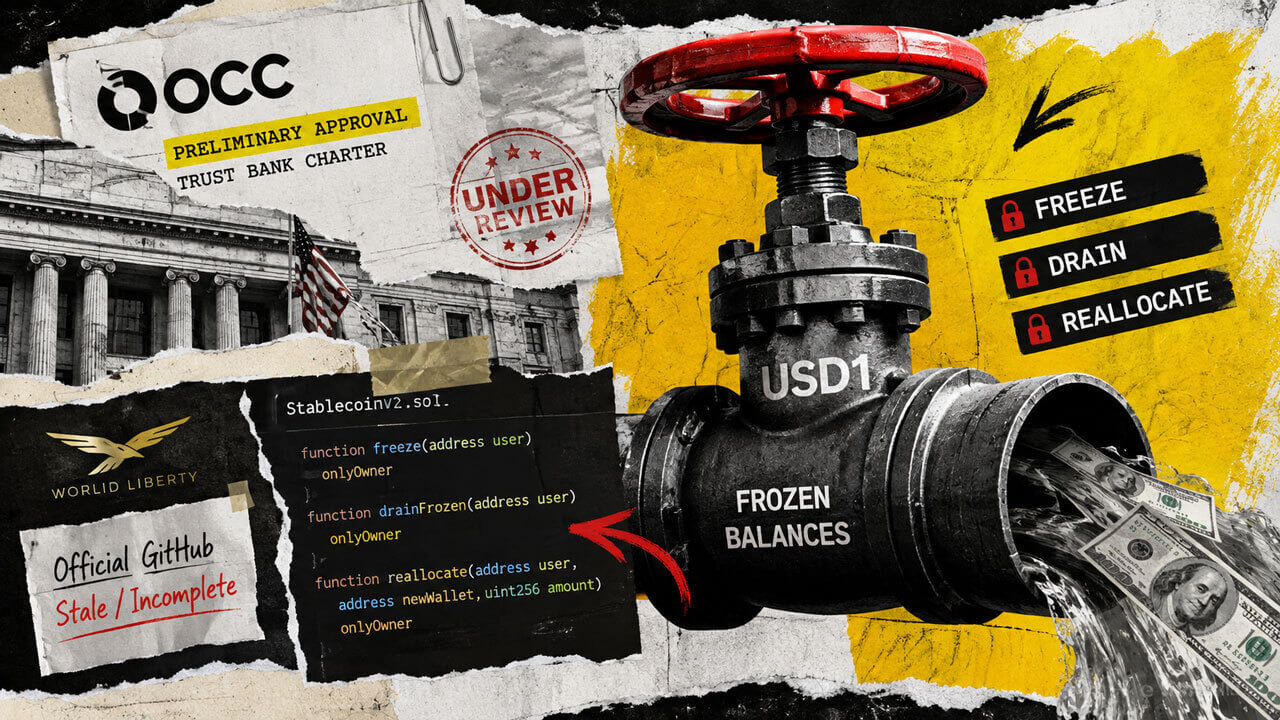
The gap is verifiable, even as Justin Sun’s broader claims of fraud remain unsupported by available evidence.
 CryptoSlate•Oluwapelumi Adejumo21 Aug
The latest court ruling keeps potentially sensitive allegations in public view as the wider dispute continues.
Justin Sun's individual claims will be heard in open court, and the two sides must negotiate which of the claims brought by his corporate plaintiffs go to a private arbitrator. No written order had been entered on the docket as of Thursday afternoon.
 The Defiant•The Defiant Team21 Aug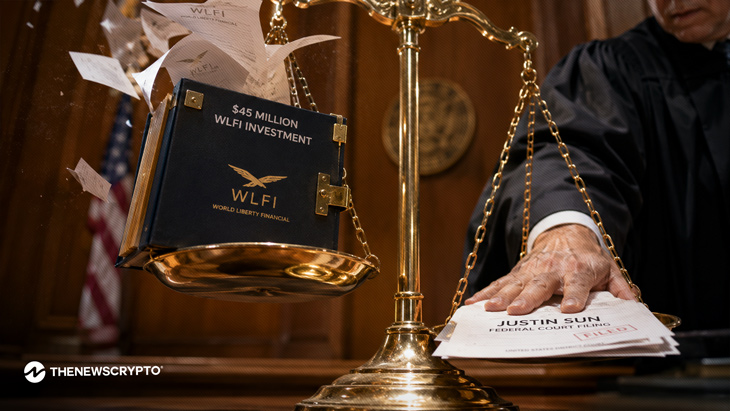
Justin Sun secured a partial procedural victory in his legal battle against World Liberty Financial on August 20. A California federal judge apparently decided to allow Sun’s personal claims to proceed in court. This came after World Liberty had filed a motion to transfer the lawsuit to arbitration and put
 TheNewsCrypto•Lakshya Baskar21 Aug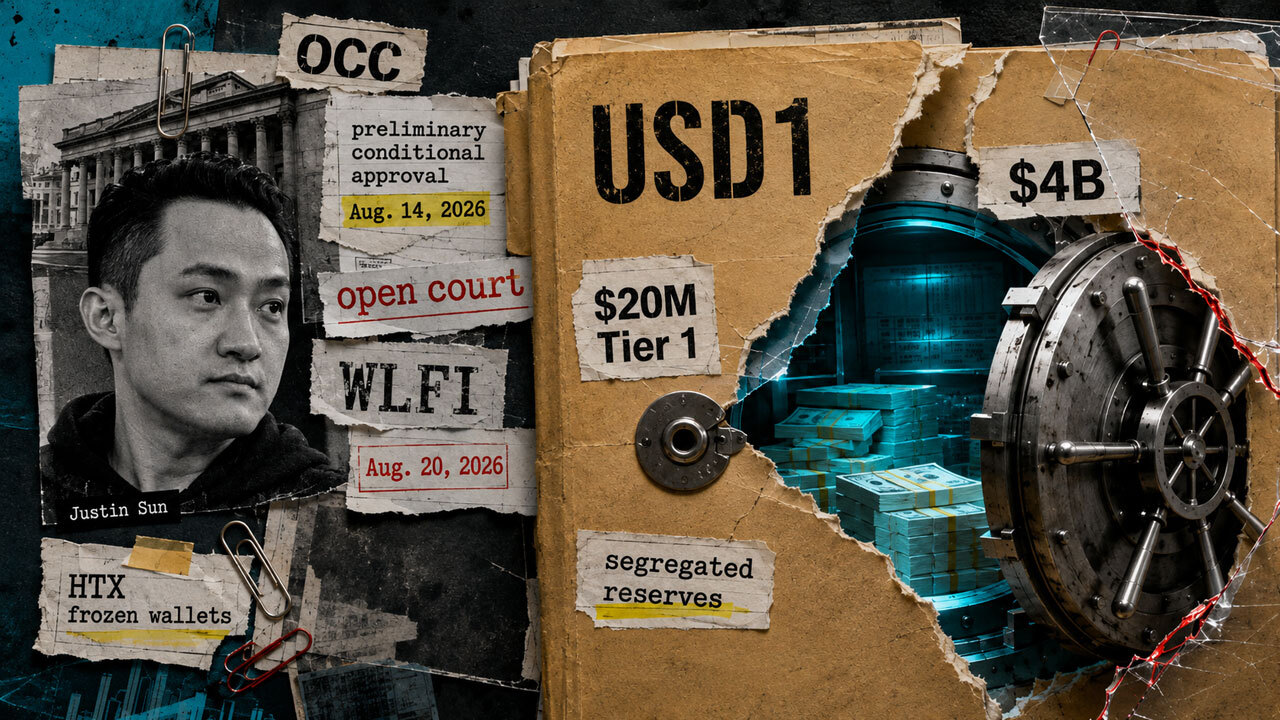
Justin Sun said on Aug. 20 that a California federal judge rejected World Liberty Financial's attempt to force all of his claims into private arbitration, keeping his individual allegations in open court. The public docket confirms World Liberty filed a motion to compel arbitration and a separate motion to seal case materials. That news arrives […]
CryptoSlate•Gino Matos21 Aug
Justin Sun called the arbitration hearing a "major victory” while World Liberty Financial CEO Zach Witkoff claimed Sun is lying.
Protos•Jacob Lyon21 Aug