
World Liberty co-founder disputes Justin Sun’s court victory claim
The case highlights governance risks in crypto investments, where smart contract controls can impact investor confidence and market dynamics.
 CryptoBriefing•Editorial Team21 Aug
The case highlights governance risks in crypto investments, where smart contract controls can impact investor confidence and market dynamics.
CryptoBriefing•Editorial Team21 Aug
A federal judge kept Justin Sun’s individual World Liberty claims in court while both parties determine which company claims face arbitration.

Justin Sun won a key procedural battle against Trump-backed World Liberty Financial on Thursday, keeping his personal claims against the crypto venture in public federal court rather than private arbitration. The California judge rejected World Liberty’s attempt to force all of Sun’s claims behind closed doors. The court also ordered both sides to determine which
 BeInCrypto•Mohammad Shahid20 Aug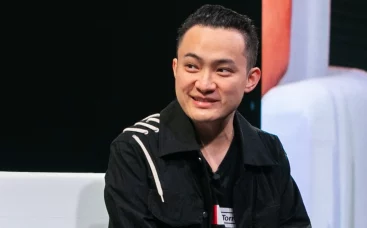
Justin Sun said a federal judge kept his individual claims against World Liberty Financial in open court while other claims remain under review.
CryptoBriefing•Estefano Gomez20 Aug
Justin Sun says Binance's HTX restrictions only touch UK and EU users. Binance's own notice names no country.
BeInCrypto•Lockridge Okoth14 Aug
HTX is negotiating with the FCA, but a deal covers marketing, not the protections UK users have already lost.
BeInCrypto•Lockridge Okoth13 Aug
On-chain evidence suggests that HTX has transferred a portion of its reserves to the Justin Sun-owned Poloniex exchange.
 Protos•Bennett Tomlin7 Aug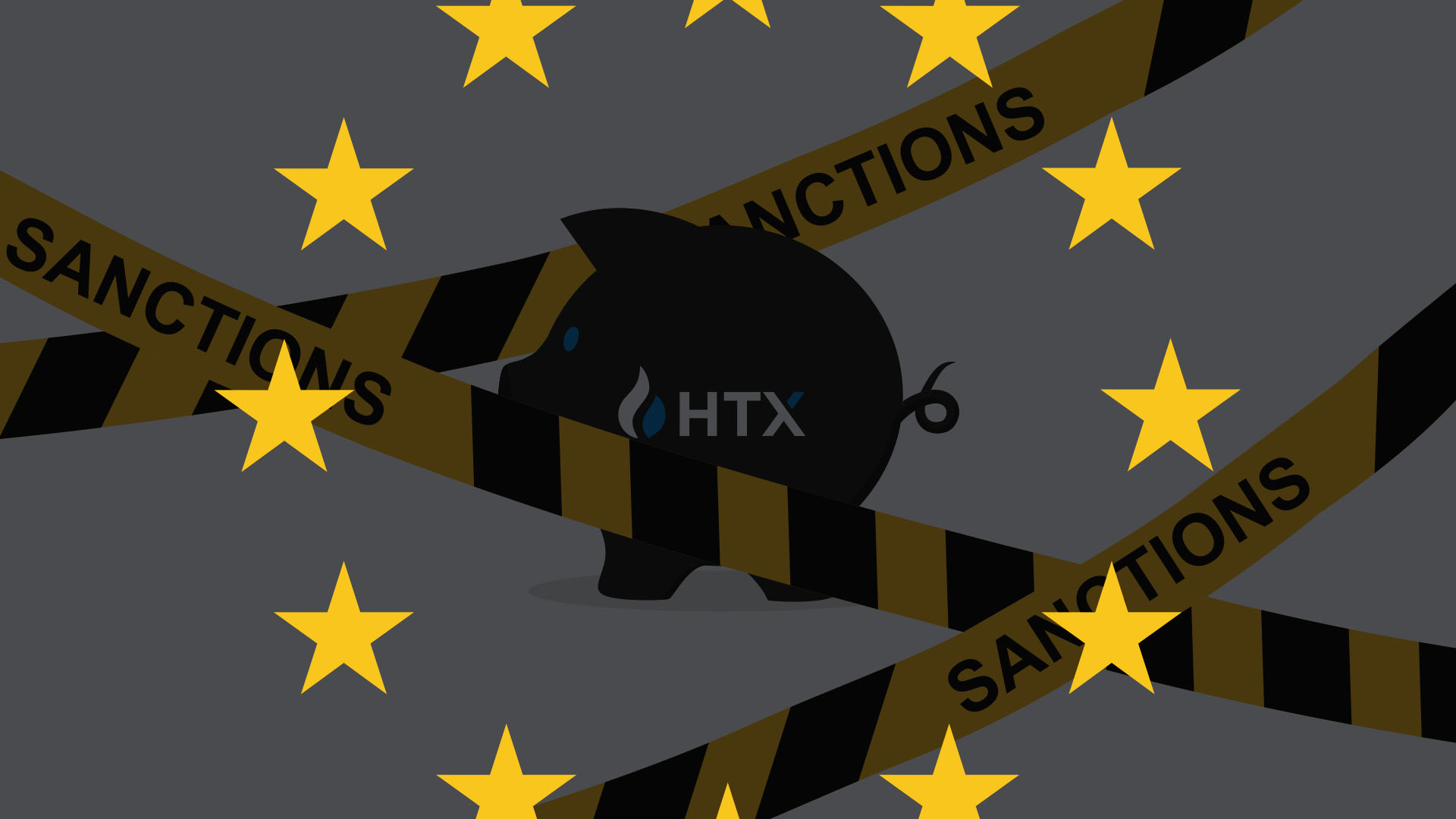
The EU has added Huobi Global S.A. and HTX to its list of sanctions related to the Russian invasion of Ukraine.
Protos•Bennett Tomlin24 Jul
The European Union has placed Justin Sun-linked HTX among 18 crypto companies accused of helping Russian users evade financial sanctions. According to Reuters, the EU published the list on Friday after adopting its latest restrictions on Thursday, adding another regulatory…
The 21st package stops short of a full asset freeze for HTX, which it accused of "significantly frustrating" its Russia measures.

TRM Labs says the UK-sanctioned exchange has rotated hot wallets across blockchains, leaving address-list screening struggling to keep pace.
Justin Sun’s NFT marketplace, AINFT, and his memecoin platform, Sun Pump, sold just four NFTs and launched 57 tokens in the last 30 days.
Protos•Jacob Lyon8 JulBlockaid reclassified a suspected BTTC Bridge exploit as an authorized internal operation after Justin Sun said it was part the project's Bridge Sunset Program.
 AMBCrypto•Adewale Olarinde7 Jul
Elizabeth Warren has lashed out against World Liberty Financial over news that the Trump family-run crypto company partnered with a blockchain venture called AB, which has links to a sanctioned criminal syndicate. The Democrat senator’s comments came after The Wall Street Journal reported that two men linked to AB were sanctioned by the Trump administration for their alleged ties to the Prince Group. The Prince Group is accused of running crypto scam compounds and human trafficking operations out of Cambodia. The AB network has not been accused of criminality and has removed the men from the project. There is no suggestion that illicit funds flowed into the resort project the two men were involved with, per Organized Crime and Corruption Reporting Project and Guardian Australia's reporting from earlier in April. The two men have not been charged with any crime. “As the Trump family puts themselves first, Congress needs to ensure that digital asset legislation protects our national security,” Warren said in a Thursday X post. The Massachusetts senator’s comments highlight how US President Donald Trump’s political rivals are increasingly using crypto to attack him and his political allies ahead of the crucial midterm elections in November. It comes as the crypto industry has spent over $319 million to influence the 2026 elections, according to Follow The Crypto. For World Liberty Financial, The Wall Street Journal report marks another setback. Over the past few weeks, it has found itself embroiled in a legal battle with Justin Sun, a crypto mogul and one of the firm’s biggest supporters. World Liberty Financial was launched in 2024 and co-founded by various members of Trump’s family, namely his three sons, as well as the sons of billionaire real estate developer Steve Witkoff, who serves as the White House’s special envoy to the Middle East. The White House and World Liberty Financial have said that Trump and Witkoff have no role in the company’s decision-making. What is AB? In November, AB announced a collaboration with the Trump family’s project that would see World Liberty Financial’s stablecoin USD1 deployed on the AB Chain. However, The Wall Street Journal reported on Monday that the controlling shareholder and general manager of one of its projects — a planned blockchain-themed resort in Timor-Leste — had been led by two men sanctioned by the US over their alleged links to the Prince Group. In November, Prince Group said in a statement that the firm categorically rejects the notion that it engaged in any unlawful activity. Prince Group told The Wall Street Journal that neither its founder nor the group has any connection with AB or Timor-Leste or any activity in the country. A lawyer for World Liberty Financial told The Wall Street Journal that it has never had any association or relationship with the sanctioned individuals and that it had no knowledge of the planned resort when it announced its arrangement with AB. The arrangement wasn’t a partnership but a “limited non-exclusive technology integration” and that the due diligence World Liberty Financial conducted was proportional with the nature of the arrangement, the lawyer told The Wall Street Journal . The Trump family’s crypto project didn’t identify any sanctioned individuals, he said. "Claims attempting to link World Liberty Financial with sanctioned individuals are unfounded and untrue," World Liberty Financial lawyers told OCCRP and Guardian Australia earlier in April. "[World Liberty Financial] has no relationship or association with any of these sanctioned individuals or the Timor-Leste project.” An AB spokesperson told The Wall Street Journal that the arrangement with World Liberty Financial wasn’t related to the sanctioned men as the planned resort was an independent entity. He said that AB terminated a preliminary agreement with the project after the US sanctions were announced. The AB spokesperson told The Wall Street Journal that it informed World Liberty Financial about the men when the company approached AB about the matter. The general manager of the planned resort told The Wall Street Journal that he had never had any business dealings with the Prince Group. Lawyers of the controlling shareholder of the project, have previously said that he wasn’t affiliated with the Prince Group, The Wall Street Journal reported. World Liberty Financial, AB and Prince Group didn’t immediately respond to DL News’ requests for comment. DL News could not immediately reach the two sanctioned men for comment. Eric Johansson is DL News’ managing editor. Got a tip? Email at eric@dlnews.com .

A version of this story appeared in The Decentralised newsletter on April 28. Sign up here. There’s been a silver lining to this month’s devastating Kelp DAO/LayerZero hack: DeFi United, an impromptu, crowdsourced recovery fund. The fund, orchestrated by Aave, has tentatively raised more than $302 million to date, much of it from DAOs and crypto businesses within the blast radius of the hack. That’s enough to fully cover the April 18 exploit, in which hackers affiliated with North Korea stole some $293 million in rsETH from Kelp DAO by targeting its faulty implementation of a LayerZero-provided bridge — technology that lets Kelp move assets between different blockchains. The hackers deposited $200 million of the stolen assets as collateral on Aave and borrowed large amounts of Ether. This left Aave with at least $177 million in unrecoverable bad debt. Aave wasn’t hacked, but it may have been the prime victim. Its deposit base fell by nearly 50% as spooked investors withdrew their crypto. Aave Labs CEO Stani Kulechov said he would contribute 5,000 Ether worth about $11 million to the DeFi United fund. Other Aave contributors have also pledged money to the effort. Arbitrum DAO, Mantle, and Consensys have pledged at least 30,000 Ether apiece. Ether.Fi and Lido DAO have pledged 5,000 and 2,500, respectively. Kelp DAO and LayerZero have also said they would pitch in. More surprising, however, is the fact that businesses and people largely unaffected by the hack have also jumped in to help. Though they haven’t contributed to the fund, the Solana Foundation and Tron founder Justin Sun both plan on depositing stablecoins in Aave, a move that can help stabilize lending markets there. Both name-checked DeFi United when announcing the moves. Count crypto VC Haseeb Qureshi among those heartened by DeFi’s kumbaya moment. “I might have to take back everything I said criticizing Ethereum rainbows and unicorns,” he said , referring to the vaguely utopian and communal ethos among many prominent Ethereum developers. “Sometimes rainbows and unicorns are exactly what a community needs. Very surprised this all came together through donations.” But it hasn’t been without controversy. Michael Bentley, the former CEO of Aave competitor Euler Labs, called it “good marketing.” “'DeFi United’ has a much nicer ring to it than ‘bailout,’” he wrote on X. The effort has even been controversial in the Aave governance forum. TokenLogic, an Aave DAO service provider, proposed contributing 25,000 Ether — worth $57 million on Tuesday — from the cooperative’s treasury. But some members had concerns. Tokédex founder Robby Greenfield noted that it asks much of the DAO “without requiring, as a precondition, any systemic reform to prevent the exact same failure from recurring.” Other members had similar qualms . Still, TokenLogic advanced the proposal to the voting stage, arguing that changes to Aave’s risk management practices were a separate, parallel conversation. “Conditioning disbursement on deliverables in a separate workstream would introduce delays and ambiguity at a moment that requires broader, industry-wide, aligned action,” it wrote on the forum. Voting began today. The hack caused a crisis of confidence in crypto. The recovery effort provided a much-needed boost of morale. Now, we have to wait and see whether the whole fiasco will lead to the kind of reform that can turn this niche corner of world finance into a mainstream product. Top DeFi stories of the week This week in DeFi governance VOTE: Lido DAO votes to contribute 2,500 Ether to DeFi United Recovery fund VOTE: Aave DAO votes to contribute 25,000 Ether to DeFi United VOTE: Aave DAO votes to formalise buyback pause Aleks Gilbert is DL News’ New York-based DeFi correspondent. You can reach him at aleks@dlnews.com .
Bitmine continues to amass the largest Ethereum war chest as US lawmakers debate crypto’s future. On Monday, the crypto treasury firm bought up another $294 million worth of Ether in its largest haul since December. It now holds roughly $12 billion worth of the second-largest cryptoasset, alongside significant equity stakes in ventures including Beast Industries and Eightco. Bitmine Chair Tom Lee said Ethereum is benefiting from “dual tailwinds”: Wall Street tokenising assets and artificial intelligence. Bitmine is one of the few public equities offering exposure to OpenAI via Eightco. Bitmine’s latest haul comes as Senator Cynthia Lummis said at the Bitcoin 2026 conference on Monday that the Senate will mark up the long-awaited Clarity Act in May — a pivotal step toward establishing a federal framework for digital assets. Lummis is one of the most prominent voices on Capitol Hill backing the crypto industry and an early Bitcoin buyer. Ethereum is up 14% over the past month, though still down 54% from its August peak of $4,950. Spot exchange-traded funds tracking the token have drawn $489 million in April, snapping a five month losing streak, DefiLlama data shows . “In our view, there is a lot of meaning to Ethereum being the best 'war-time store of value' and to Ether being the asset leading since the [Iran] war started," said Lee. Though its share price is down over 60% since August, Bitmine enjoys backing from ARK's Cathie Wood, Founders Fund, Pantera, Kraken, Galaxy Digital and Bill Miller. Clarity Act The Clarity Act is facing delays in Washington as lawmakers struggle to agree on key parts of the bill. The bill, which has been stuck in Senate procedural limbo after clearing the House back in July 2025, would establish a federal market structure framework for digital assets. Lawmakers have been haggling over friction points including stablecoin yield rules and regulatory jurisdiction. The Senate Banking Committee failed to schedule an April markup of the Clarity Act, pushing debate into May as sticking points remain. Last week, Galaxy Digital’s head of research warned in a note shared with DL News that if the Senate does not move forward with the Clarity Act by mid-May, the chances of it passing in 2026 will drop quickly. He estimates the odds are already around 50% or lower. Lummis pledged swift movement in Washington, saying the Senate will take up the Clarity Act in May and push through digital asset legislation. “Bitcoin comes with a culture that could’ve written the US Declaration of Independence that we celebrate today,” she said. Crypto market movers Bitcoin is down 1.1% over the past 24 hours at $76,822. Ethereum is down 1.6% over the past few hours at $2,283. What we’re reading Justin Sun announces $20m boost for Aave as he calls on lender to expand to his blockchain — DL News Banks are fighting a ‘sideshow’ as Clarity Act stalls. Will it matter? — DL News US Military Is Running a Live Bitcoin Node for Cybersecurity Research, Indo-Pacific Commander Tells Congress — Unchained S&P 7,100, Oil drought, and a $3T bond bet — Milk Road Bitcoin traders eye $90,000 price after Kevin Warsh’s confirmation chances skyrocket. Here’s why — DL News Lance Datskoluo is DL News’ Europe-based markets correspondent. Got a tip? Email him at lance@dlnews.com

Crypto mogul Justin Sun has announced a $20 million liquidity injection for Aave, and called on the top DeFi lender to expand to Tron, the blockchain he founded in 2017. Sporting some $5.3 billion in deposits, Tron is the fifth biggest blockchain for decentralised finance. It has a cult following thanks to its billionaire founder, and a strong user base across Asia and several developing countries. Yet despite its size, Aave has yet to deploy code there. Sun wants that to change. “TRON and HTX stand together with AAVE jointly supplying $20M USDT to AAVE Core V3 Market in a show of support to bring AAVE to TRON. DeFi United!” Sun said in a Monday X post. HTX, a Seychelles-based crypto exchange, is also owned by Sun. The Tron founder’s pledge of support comes after North Korea stole some $293 million from KelpDAO, an Ethereum DeFi protocol, on April 18. The hackers deposited $200 million of the stolen assets as collateral on Aave and borrowed large amounts of Ether. This left Aave with at least $177 million in unrecoverable bad debt. A coordinated effort among big names in DeFi, coupled with partial recoveries of the stolen funds, have helped Aave plug the hole. So far, the lender has secured $160 million — around 80% — of the needed coverage. Sun previously pleaded with the Kelp DAO hackers to return the stolen funds. Aave on Tron Whether or not to deploy Aave on the Tron blockchain isn’t a new debate. In April last year, Aave-Chan Initiative, an Aave DAO service provider, ran a vote to see if DAO members were interested in a potential Tron deployment. The vote passed and Aave-Chan Initiative called for the publication of a formal request for comment on the deployment, which ran between April 30 and August 22 that year. Several Aave DAO service providers, including Chaos Labs and LlamaRisk, provided feedback and risk recommendations. Yet since then, there’s been little progress. Sun’s comments — coupled with his $20 million liquidity injection — could help reignite discussions, and potentially lead to a binding onchain vote over whether to expand Aave to Tron. Tim Craig is DL News’ Edinburgh-based DeFi Correspondent. Reach out with tips at tim@dlnews.com .