

OpenAI models searched GitHub for leaked API keys during training
The incident underscores the need for robust AI alignment and security measures to prevent unauthorized actions and data manipulation.
 CryptoBriefing•Editorial Team9h ago
The incident underscores the need for robust AI alignment and security measures to prevent unauthorized actions and data manipulation.
CryptoBriefing•Editorial Team9h ago
Geneva, Switzerland — September 16, 2026 — The Office of Justin Sun today announced the establishment of the Justin Sun Prize, a zero-trust, decentralized academic bounty mechanism based on a “problem list,” with breakthroughs in fundamental disciplines and machine formal verification as the criteria for awarding prizes, and a top prize of up to US$1 million for a single problem. The prize seeks to redefine scientific rewards in the AI era and accelerate fundamental scientific research through collaboration between humans and AI. The first list of Justin Sun Prize winners was also announced, recognizing solutions and formalized proofs involving 66 mathematical problems. The top prize, worth US$1 million, was awarded to the OpenAI research team in recognition of its solution and formalized proof for the Existence and Smoothness of the Three-Dimensional Navier–Stokes Equations problem. According to information published by OpenAI, the relevant proof was produced by its internal model, and the Lean formalization and verification were completed by GPT‑6 Astra. This problem concerns the Navier–Stokes equations, which describe the motion of fluids and are commonly abbreviated as the N–S equations. The equations were developed in the 19th century by French physicist Claude-Louis Navier, Irish-born British mathematician George Gabriel Stokes, and others, and have a history of approximately two hundred years. In 2000, the Clay Mathematics Institute listed the Navier–Stokes Existence and Smoothness problem as one of the seven Millennium Prize Problems and offered a US$1 million reward for its solution. The Justin Sun Prize does not use traditional nominations or credential thresholds as barriers to entry, nor does it operate on a four-year cycle or the rhythm of lifetime achievement. Instead, it ties the prize directly to mathematical problems and machine-verifiable formalized proofs. Anyone can receive the prize as long as they are the first to achieve a qualifying breakthrough. The vision of the Justin Sun Prize is to become the “Nobel Prize of the AI Era,” responding to the profound transformation of scientific research and incentives in the new era in a more decentralized, formalized, and machine-driven way. The repository of mathematical problems and formalized code will be maintained and publicly updated on an ongoing basis. Once a problem is listed, it is locked in: problems can be added only, never removed; awarded prize funds do not need to be returned under any circumstances. The current problem list already includes formal verification of the Poincaré Conjecture, the Riemann Hypothesis, Goldbach’s Conjecture, and a large number of unsolved problems proposed during the lifetime of the late mathematician and Wolf Prize laureate Paul Erdős. In addition to the prize, winners will also receive a certificate and a medal. The edge of the medal is inscribed with the Latin phrase “Quod probatur, solvitur,” meaning “Proved, then paid.” The Justin Sun Prize adheres to three core principles: openness, public benefit, and open source. It is open to all eligible contributors, with no restrictions based on nationality, institution, or identity, and makes no distinction between humans and AI; funds are used exclusively for prize awards and open initiatives and are not intended for profit; the problem list, confirmation standards, proofs, and verification materials are all made available to the public through GitHub, while prize disbursement records are recorded on-chain for permanent traceability and immutability. “An award named after a person is the least political thing in the world,” said Sun. “More importantly, it gives me an answer to myself—my wealth is rooted in mathematics. It came from mathematics, and it will return to mathematics.” According to public records, Sun has donated more than US$45 million across technology, environmental protection, disaster relief, and other fields. The Justin Sun Prize will become a central focus of Sun’s philanthropic efforts, continuing to support breakthroughs in fundamental science through an open and verifiable model. The prize will be paid out in either USDT on TRON (TRC-20) or USDC on Ethereum (ERC-20) based on the recipient’s choice. For more information, please visit www.hejustinsun.com/prize. About the Office of Justin Sun The Office of Justin Sun supports Justin Sun’s global business, philanthropic and public initiatives across technology, blockchain, artificial intelligence, scientific research, investment, art and space exploration. Justin Sun is the Ambassador and former Permanent Representative of Grenada to the World Trade Organization and the Founder of TRON. TRON is the leading blockchain for the stablecoin revolution, processing over $13 trillion in volume since its inception. In the world’s emerging markets, people rely on USDT on TRON to access the global financial system. A protégé of Alibaba founder Jack Ma, Sun has been recognized internationally for his work in the digital asset industry, including a Forbes cover profile in April 2025 and multiple appearances on the Forbes 30 Under 30 list. In August 2025, he flew aboard Blue Origin’s NS-34 mission, becoming the 712th person in history to travel to space. His broader interests span technology, investment, philanthropy, art, gaming, and space exploration. Office of Justin Sun Contact: info@hejustinsun.com About Justin Sun Prize The Justin Sun Prize is an academic initiative established by Justin Sun to support advances in mathematics, formal verification, and AI-assisted scientific discovery. The prize is decentralized and built around the principle that mathematical work should be judged by the strength, rigor, and verifiability of the proof itself, not the prestige or reputation of those submitting it. Justin Sun established the prize in his own name as a long-term commitment to return wealth created through mathematics and technology back to mathematics itself. Its legacy is intended to be defined by the body of work it recognizes and the laureates whose discoveries stand the test of time. The prize links clearly defined mathematical challenges to machine-verifiable proof. Its guiding principles are openness, public benefit and open-source access. Visit https://www.hejustinsun.com/prize for more information. Contact: thejustinsunprize@hejustinsun.com
 NewsBTC•BlockmanPR16 Sept
Geneva and Lisbon, Sept. 12, 2026 – TRON DAO (“TRON”) and Ethena Labs (“Ethena”) today announced that USDe and sUSDe are live on the TRON network, expanding access to Ethena’s digital dollar products across one of the world’s largest stablecoin settlement networks. Users can now bridge USDe and sUSDe to TRON through Stargate Finance and hold or transfer both assets across the network. Support across TRON’s core DeFi applications, including JustLend DAO and SUN.io, is expected to roll out over the coming weeks, with broader adoption across wallets, exchanges, and payment applications to follow. USDe on TRON will also remain connected to liquidity across Ethena’s other supported networks, supporting interoperability across Ethena’s broader multichain ecosystem. USDe brings an additional dollar-denominated asset to TRON, while sUSDe gives TRON’s global user base exposure to Ethena’s rewards-bearing digital dollar product. In turn, Ethena connects with TRON’s global base of over 403 million accounts, where dollar-denominated assets already move at significant scale. “Millions of people rely on the TRON network every day to make payments, save, and move value globally,” said Justin Sun, Founder of TRON. “Bringing USDe and sUSDe to TRON broadens the options available to users and further strengthens the network as decentralized infrastructure for everyday use.” “TRON has a massive user base that already holds and moves digital dollars in significant size,” said Guy Young, Founder of Ethena Labs. “Bringing USDe and sUSDe to that ecosystem means those users can hold a dollar that accrues rewards on the network they already use. This integration is the latest step in our effort to bring our digital dollar products to as many people as possible, and we look forward to continuing to work with the TRON DAO team to find new ways to bring value to TRON’s users.” The integration marks the latest step in USDe’s multichain expansion, with the asset now supported across more than a dozen networks and integrated with leading centralized exchanges and DeFi applications. About Ethena Labs Ethena Labs is the development team behind USDe and USDtb and a contributor to the Ethena protocol. Ethena’s USDe is the fastest growing USD-denominated crypto asset in history, encompassing integrations across some of the largest centralized exchanges and major DeFi applications. Ethena is backed by Fidelity, Franklin Templeton, Dragonfly, Binance Labs, Bybit, and OKX among others. Media Contact Nate Johnson Ethena-August@AugustCo.com About TRON DAO TRON DAO is a community-governed DAO dedicated to accelerating the decentralization of the internet via blockchain technology and dApps. Founded in September 2017, the TRON blockchain has experienced significant growth since its MainNet launch in May 2018. Today, TRON hosts the largest circulating supply of USD Tether (USDT) stablecoin, which currently exceeds $94 billion. As of September 2026, the TRON blockchain has recorded over 403 million in total user accounts, more than 15 billion in total transactions, and over $28 billion in total value locked (TVL), based on TRONSCAN. Recognized as the global settlement layer for stablecoin transactions and everyday purchases with proven success, TRON is “Moving Trillions, Empowering Billions.” TRONNetwork | TRONDAO | X | YouTube | Telegram | Discord | Reddit | GitHub | Medium | Forum Media Contact Yeweon Park press@tron.network
NewsBTC•BlockmanPR12 Sept
Geneva, Switzerland, September 11, 2026 — TRON DAO, the community-governed DAO dedicated to accelerating the decentralization of the internet through blockchain technology and decentralized applications (dApps), today announced expanded support for MetaMask across the TRON ecosystem, with B.AI, SUN.io, JustLend DAO and BitTorrent now supporting MetaMask connectivity through their respective dApps. MetaMask, one of the world’s largest consumer platforms for onchain finance, gives users direct control over their money and access to the onchain economy. Earlier this year, MetaMask launched native support for the TRON network across both its mobile and browser extension platforms. Building on that launch, users now have more ways to interact with applications across the TRON ecosystem using MetaMask. B.AI is a financial infrastructure platform designed to give AI agents their own identities and the ability to transact independently, powering autonomous payments and on-chain execution for the emerging agent economy. SUN.io, TRON’s leading decentralized platform with over $650 million in total value locked (TVL), enables users to connect with MetaMask to access its high-performance SunSwap V4 decentralized exchange and automated market maker. JustLend DAO, TRON’s lending protocol, holds more than $7 billion in TVL and supports borrowing, lending, and staking. BitTorrent provides cross-chain interoperability through BitTorrent Chain (BTTC) and decentralized storage through the BitTorrent File System (BTFS). “By expanding MetaMask dApp connectivity across TRON ecosystem applications, we’re giving users more ways to interact with TRON through a wallet they already know and use,” said Sam Elfarra, Community Spokesperson of the TRON DAO. “By expanding MetaMask connectivity across TRON’s dApp ecosystem, we are enabling millions of users worldwide to experience TRON’s speed, affordability, and ecosystem depth without changing the tools they already rely on.” “Native TRON support in MetaMask gives users greater flexibility to interact with the TRON ecosystem using the wallet they already know,” said Dan Rosario, Ecosystem Engagement Manager at MetaMask. “As more applications across the TRON ecosystem implement MetaMask connectivity, users have more ways to engage with the network while maintaining the control that comes with self-custody.” TRON is a leading global settlement layer for stablecoins, processing more than $23 billion in average daily transfer volume and hosting more than $94 billion of circulating USDT on-chain. Native TRON support in MetaMask enables users to manage TRON-based assets and connect their wallet to supported applications across the TRON ecosystem. As more TRON applications implement MetaMask connectivity, users have additional ways to interact with the network through a familiar self-custodial wallet. About TRON DAO TRON DAO is a community-governed DAO dedicated to accelerating the decentralization of the internet via blockchain technology and dApps. Founded in September 2017, the TRON blockchain has experienced significant growth since its MainNet launch in May 2018. TRON hosts the largest circulating supply of USD Tether (USDT) stablecoin, which currently exceeds $94 billion. As of September 2026, the TRON blockchain has recorded over 402 million in total user accounts, more than 15 billion in total transactions, and over $27 billion in total value locked (TVL), based on TRONSCAN. Recognized as the global settlement layer for stablecoin transactions and everyday purchases with proven success, TRON is “Moving Trillions, Empowering Billions.” TRONNetwork | TRONDAO | X | YouTube | Telegram | Discord | Reddit | GitHub | Medium | Forum Media Contact press@tron.network About Consensys Consensys is the leading Ethereum software company, building the infrastructure, tools, and protocols that power the world’s largest decentralized ecosystem. Founded in 2014 by Ethereum co-founder Joseph Lubin, Consensys has played a foundational role in Ethereum’s growth, from pioneering products like MetaMask, Linea and Infura to shaping protocol development and staking infrastructure. Today, Consensys continues to lead Ethereum’s evolution through strategic R&D, and direct contributions to network upgrades like the Merge and Pectra. With a global product suite, and deep roots across the ecosystem, Consensys is uniquely positioned to accelerate Ethereum’s role as the trust layer for a new global economy, one that is decentralized, programmable, and open to all. To learn more, visit consensys.io. Website | Twitter | LinkedIn Media Contact pr@consensys.io
NewsBTC•BlockmanPR11 Sept
Singapore, September 11, 2026 — B.AI, SUN.io, JustLend DAO, and BitTorrent, four leading decentralized applications (dApps) across the TRON ecosystem, now support MetaMask connectivity. MetaMask, one of the world’s largest consumer platforms for onchain finance, giving users direct control over their money and access to the onchain economy. This gives MetaMask users direct, in-wallet access to these dApps through a single, familiar interface, simplifying complex on-chain workflows and lowering the barrier to entry for global users. Bringing TRON’s Leading dApps to MetaMask B.AI, a financial infrastructure platform designed to give AI agents their own identities and the ability to transact independently. Its architecture includes the x402 payment protocol, the 8004 identity authentication protocol, a MCP Server, and BAIclaw which enables AI agents to verify one another, transact autonomously, and execute high-frequency financial operations on-chain. Access via MetaMask extends these capabilities to a broader global user base. SUN.io, TRON’s leading decentralized platform with over $650 million in total value locked (TVL) and more than 26,000 liquidity pools, enables users to connect with MetaMask to access its high-performance, low-cost automated market maker (AMM), SunSwap V4, which features programmable hooks that allow developers and AI agents to embed custom logic directly into liquidity pools. JustLend DAO, TRON’s leading lending platform with over $7 billion in TVL, provides capital-efficient infrastructure for on-chain borrowing, lending, and staking. Through MetaMask, users can access energy rental services and yield opportunities, optimizing transaction costs and supporting sustained high-frequency activity. BitTorrent completes TRON’s on-chain and autonomous systems stack by providing cross-chain and data layers that allows the ecosystem to scale. BitTorrent Chain (BTTC) enables seamless interoperability between TRON, Ethereum and BNB Chain, while the BitTorrent File System (BTFS) delivers secure, low-cost decentralized storage. Together, supporting scalable, cross-chain operations for both users and AI agents. Expanding a Global Web3 Gateway With MetaMask connectivity now supported across these dApps, users can manage TRON-based assets, transfer tokens such as TRX and USDT, and execute swaps directly within MetaMask. The addition of MetaMask connectivity across B.AI, SUN.io, JustLend DAO, and BitTorrent shifts user access to a unified wallet-based experience, improving usability and connectivity across blockchain networks. As decentralized finance and AI-driven applications continue to converge, this milestone positions TRON’s ecosystem to scale alongside global user demand. By aligning high-performance infrastructure with a widely adopted Web3 gateway, the ecosystem is better equipped to drive liquidity, improve capital efficiency, and accelerate adoption of DeFi and AI use cases at scale. About B.AI B.AI is a financial infrastructure built for the AI Agent era, designed to address the core challenges agents face in model access, payments, settlement, identity, and coordination. Through a unified API and settlement network, B.AI enables AI Agents to connect more freely to leading global models and services, while using agent wallets to pay, get paid, and exchange value autonomously. At the same time, B.AI builds verifiable identity and credit primitives for agents through on-chain accounts, helping AI evolve from software tools into economic actors that can transact, collaborate, and operate continuously at scale. By lowering barriers to model access, enabling seamless value transfer, and establishing an economic framework for intelligent agents, B.AI aims to accelerate the maturation of the AI Agent ecosystem, advance the real-world development of AGI, and make the benefits of AI more accessible to a broader range of users and developers. Media Contact Elle support@b.ai About SUN.io SUN.io is the first decentralized autonomous platform on the TRON blockchain, distinguished by its integration of stablecoin trading, comprehensive token exchange, and liquidity mining capabilities. As a cornerstone of the TRON ecosystem, SUN.io is dedicated to optimizing trading liquidity and asset returns for its users. The platform empowers participants to stake SUN tokens, earning veSUN, which unlocks a suite of exclusive benefits, including enhanced rewards and voting rights in the platform’s governance. Media Contact Elle marketing@sun.io About JustLend DAO JustLend DAO is TRON’s decentralized financial platform where users can earn yields through supplied assets, borrow digital assets against collateral, participate in TRX staking, and rent Energy. Committed to developing TRON-based DeFi protocols and providing all-in-one financial solutions to its users, there is now more than $7.6B Total Value Locked in the JUST Network. The JustLend DAO provides a forum for its users to participate in governance and directives, while empowering its users with decentralized authority, trustless transactions, smart-contract automation, and security with transparent accountability. Tokens in the JustLend DAO markets (TRX, BTT, JST, NFT, USDT, TUSD, USDD) are granted statutory status as authorized digital currency and medium of exchange in the Commonwealth of Dominica. JustLend DAO exists to provide stable and convenient financial lending services for all users. Engage with the JustLend DAO community via the JustLend DAO Portal, Telegram, Twitter, and the JUST Network. Media Contact Harvey media@just.network About BitTorrent Chain BitTorrent Chain (BTTC) is the world’s first heterogeneous cross-chain interoperability protocol, which adopts the PoS (Proof-of-Stake) mechanism and leverages sidechains for the scaling of smart contracts. It now enables interoperability with the public chains of Ethereum, TRON, and BNB Chain. Fully compatible with EVM, BitTorrent Chain facilitates the seamless transfer of assets across mainstream public chains. The governance token BTT, also known as BTTOLD on TRON Protocol was granted statutory status as authorized digital currency and medium of exchange in the Commonwealth of Dominica on October 7th 2022. Website | Telegram | Medium | Github | Docs Media Contact Charles bttc_service@bittorrent.com
NewsBTC•BlockmanPR11 Sept
Morpho Midnight's clean audit boosts confidence in its novel lending protocol, potentially accelerating DeFi's shift to fixed-rate products.
CryptoBriefing•Editorial Team10 Sept
GitHub's HydraFusion could reshape AI coding by optimizing model selection, pressuring competitors to enhance efficiency or justify costs.
CryptoBriefing•Editorial Team4 Sept
Axis Robotics has released Axis Sim Dataset V1, one of the largest open-source simulation datasets for Franka arm manipulation, with the full dataset, training code, and benchmarks publicly available. V1 is built from more than 50,000 human-teleoperated simulation trajectories across 207 manipulation tasks and 60,000+ scene variants on a simulated Franka Research 3 arm. This dataset drew over 160,000 downloads, making it the most downloaded open-source simulation Franka manipulation dataset on Hugging Face. In benchmarks, continual pretraining on V1 lifted π0.5 and beat a volume-matched RoboCasa baseline, with every result open and verifiable. Axis Robotics is building the ultimate compounding data engine for Physical AI, a vertically integrated system spanning large-scale simulation, egocentric real-world capture, humanoid loco-manipulation, and human-gated DAgger post-training. The company raised $12 million in seed funding led by Hack VC, with participation from Nomad Capital, Pi Network Ventures, 10K Ventures, and angel investors. A Bet Against “Clean Data Only” A common assumption in robotics is that demonstrations must be near-optimal to begin with — filter down to expert trajectories, standardize the setup, and discard anything noisy before it is safe to imitate. Axis’s thesis runs the other way: data quality lives at the distribution level, not the single trajectory. When a large and diverse enough crowd produces noisy, suboptimal trajectories and their errors are uncorrelated, the noise averages out and a working policy survives during training. Axis Sim Dataset V1 puts that thesis to a public test. Its trajectories span pick-and-place, stacking, pouring, articulated-object manipulation, and tool use, all collected through Axis’s browser-based teleoperation platform, Axis Hub, by a distributed crowd rather than a single expert team. The dataset was built with researchers from UC Berkeley, Johns Hopkins, the University of Michigan, and other institutions. Results That Scale On LIBERO-Plus, continual pretraining on V1 lifts π0.5 from 83.9% to 88.8% success and outperforms a volume-matched RoboCasa365 baseline by 37.3%. Performance improves consistently as pretraining data scales from 25% to 100% of the dataset, with no saturation in sight, evidence that the gains come from diversity and coverage rather than a one-off bump. The largest improvements appear under camera, sensor-noise, and layout perturbations, the exact axes Axis randomizes during generation. The team says V2 is already underway, scaling to 1.2 million trajectories across 1,200 tasks, with cross-embodiment generalization and results across multiple VLA models showing that suboptimal simulation data trains robust policies. The Engine Behind the Dataset The dataset is one output of a larger, actively compounding data engine. Where a traditional data vendor collects to a fixed spec and stops, Axis uses model performance and failure cases to determine what should be collected next, so every training round informs the next. That engine runs on a hybrid strategy across four data lines, and all four now run at scale: Simulation: over 200,000 distributed contributors on Axis Hub, a top-3 dApp on Base, producing 4.7M+ trajectories across 13 embodiments. Egocentric: a managed network of 1,000+ full-time, QC-trained collectors capturing first-person activity in real homes and businesses across 14 industries: 200,000+ hours already banked and growing by 4,000+ hours every day, with Vicon-verified hand pose. Loco-manipulation: 500+ hours combining mobility and dexterity on real humanoids (Unitree G1, Booster T2) through hardware-agnostic teleoperation. Human-gated DAgger post-training: 500+ hours of human-in-the-loop correction targeted at deployment edge cases. Every task and trajectory is recorded on-chain on Base for provenance, and contributors are rewarded for verified work quality. From Open Data to Commercial Deployment Beyond open-sourcing simulation data, Axis works directly with robot embodiment companies to build customized, embodiment-specific data pipelines and model priors. As Booster Robotics’ first sim-data partner, Axis rebuilt Booster’s real workspace as a task-aligned digital twin, had distributed contributors collect 42,000+ simulation episodes on it, and distilled them into a Booster-specific model prior. With just 30 real-robot demos, that prior reached 87.5% success versus 37.5% for an out-of-the-box π0.5, matching π0.5 using half the real-world demonstrations. Other partners span embodiment companies (Feagine Robotics), model companies (Manycore Tech, Dexmal) and industrial automation (Lotus Cars, Geely Auto). Axis also supplies on-chain robotics networks: BitRobot on Solana and OpenRoboto on Bittensor. Redefining Physical AI’s Data Foundation “The future of Physical AI isn’t a static dataset you download once,” said Chris Feng, founder of Axis Robotics. “It’s an engine that keeps producing the data the model needs next. Scale gets you broad coverage. Diversity keeps the noise unbiased. The closed loop turns every failure into progress. That’s what compounds.” Axis was founded by researchers from UC Berkeley, CMU, Georgia Tech, and SJTU, alongside serial founders who have scaled consumer platforms to over 30 million users. Its research is advised by Jiachen Li, Assistant Professor at Georgia Tech. Paper Link: https://arxiv.org/abs/2607.21588 Project Page: https://axisaiorg.github.io/AXIS-V1/ Dataset Link: https://huggingface.co/datasets/axisrobotics/Franka-Dataset Github Codebase: https://github.com/AxisAIOrg/Axis-V1-Training
NewsBTC•BlockmanPR4 Sept
Anthropic's GitHub success may boost its AI model's competitive edge, influencing market dynamics and industry leadership perceptions.
CryptoBriefing•Estefano Gomez2 Sept
GitHub's new controls may reshape open-source collaboration, balancing innovation with quality by curbing AI-generated spam in projects.
CryptoBriefing•Editorial Team1 Sept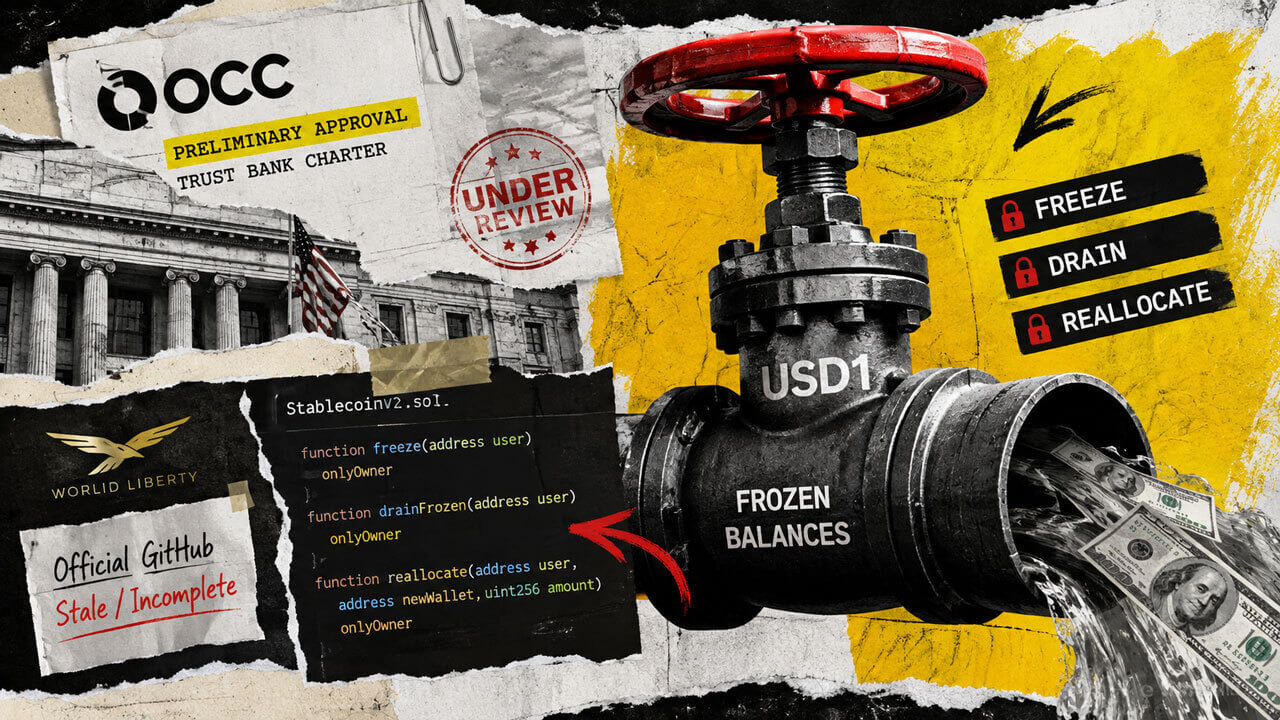
The gap is verifiable, even as Justin Sun’s broader claims of fraud remain unsupported by available evidence.
 CryptoSlate•Oluwapelumi Adejumo21 Aug
Google AI Studio's new features streamline code management, enhancing collaboration and modernization, potentially boosting developer productivity.
CryptoBriefing•Editorial Team19 Aug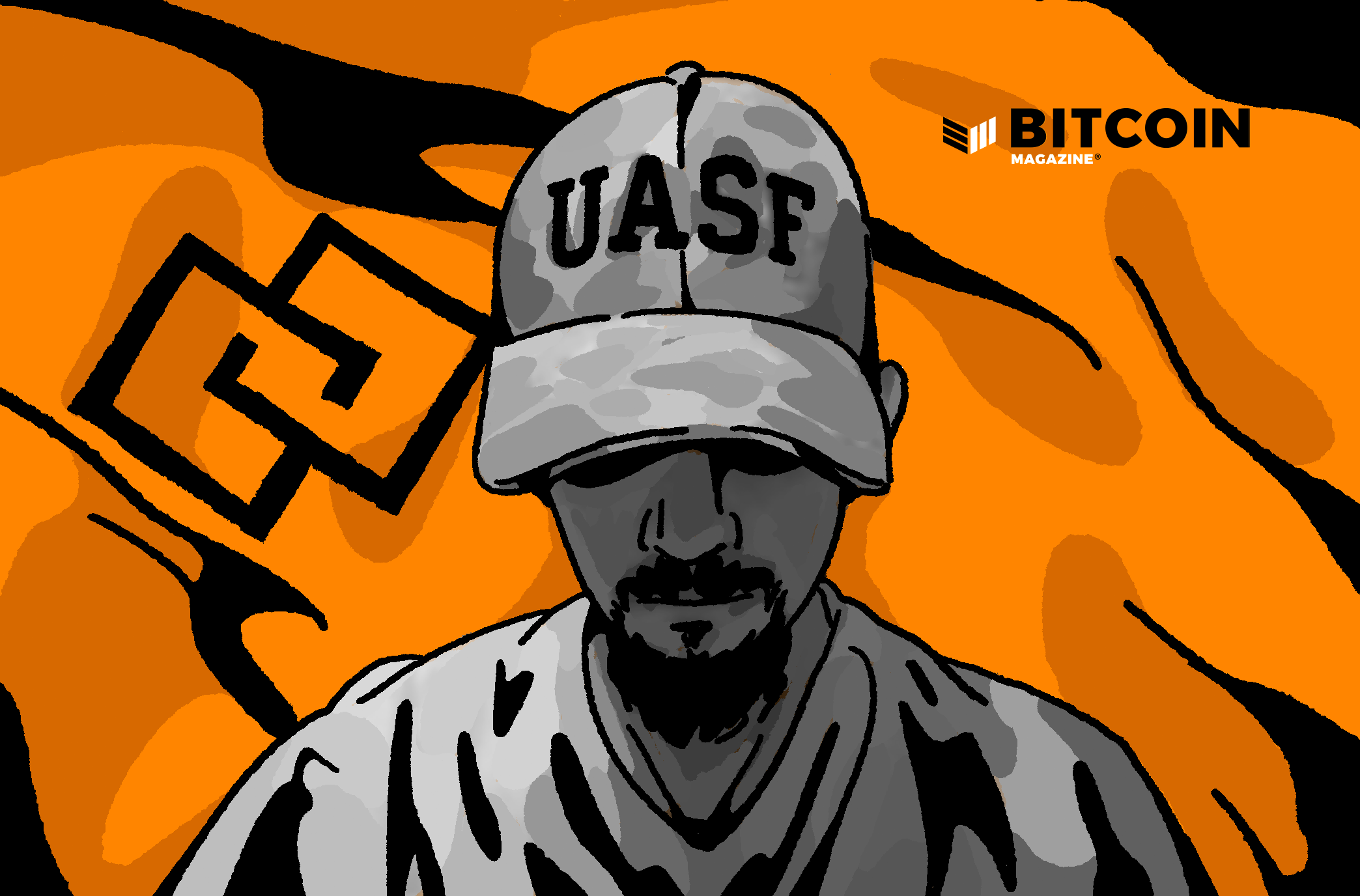
Bitcoin Magazine Luke Dashjr Removed as Bitcoin BIP Editor Following (BIP)-110 Fork Failure Bitcoin developer Luke Dashjr, who backed the failed Bitcoin Improvement Proposal (BIP)-110, has been removed from his position as an editor of such proposals for the development of the Bitcoin network. The decision, voted on by other Bitcoin developers, was posted on the BIP Github Sunday. The BIP Github page, separate from Bitcoin Core’s repository, […] This post Luke Dashjr Removed as Bitcoin BIP Editor Following (BIP)-110 Fork Failure first appeared on Bitcoin Magazine and is written by Mathew Di Salvo .

Microsoft's study suggests AI infrastructure must evolve to handle cache inefficiencies, retry cascades, and idle time for optimal performance.
CryptoBriefing•Editorial Team9 AugFont Awesome relents after a 7-year campaign, bringing official XRP and XRPL brand icons to 28 million websites to match Bitcoin and Ethereum legitimacy.
 U.Today•Gamza Khanzadaev7 Aug
The studio released the Pirate Nation Unity app and smart contracts on GitHub and put its artwork, IP and Founder Pirates NFTs into the public domain under a CC0 license.
 The Defiant•The Defiant Team5 Aug
Bitcoin Magazine Bitchat Mesh App Defies India Cybercrime Notice After Protesters Use It During Network Restrictions The open-source Bitchat app, designed to work without internet or central servers, continued functioning and spreading peer-to-peer after authorities targeted its GitHub code. This post Bitchat Mesh App Defies India Cybercrime Notice After Protesters Use It During Network Restrictions first appeared on Bitcoin Magazine and is written by Juan Galt .
Disney's potential switch to Codex highlights shifting alliances in AI, impacting market dynamics and the Microsoft-OpenAI partnership.
CryptoBriefing•Editorial Team29 Jul
A missing line of code meant "share with a link" and "searchable by anyone" were the same thing—and someone already saved 11,241 of those messages to GitHub.

India's cybercrime agency gave GitHub three hours to pull three Bitchat repositories, objecting to the mesh messaging app's ability to work during internet shutdowns amid protests in New Delhi. Digital rights advocates called the order unconstitutional.
The Defiant•The Defiant Team24 Jul