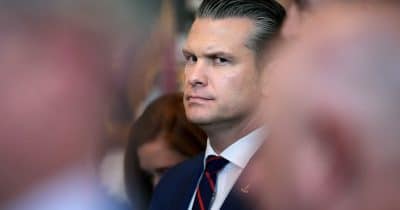
Hegseth recasts Bitcoin as national security asset amid Russia, China expansion
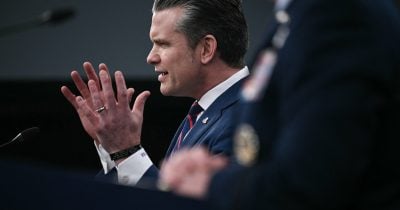
Bitcoin just got a war upgrade. On Thursday, US Secretary of War Pete Hegseth told Congress that Bitcoin projects inside the Pentagon are “classified and ongoing,” while stressing that the top crypto is a tool for American power. Hegseth delivered the comments in front of the House Armed Services Committee, responding to questions about whether the US is securing a strategic advantage in technology. “I am a long enthusiast of Bitcoin and crypto potential,” he said. “A lot of the things we are doing, enabling it or defeating it, are classified efforts that are ongoing inside our department, which do provide us a lot of leverage in a lot of different scenarios.” Hegseth’s endorsement elevates Bitcoin into the realm of geopolitical strategy at a time when Russia and China are expanding their roles in mining and using digital assets to bypass US sanctions. As rival powers lean on crypto to settle energy trades and reduce dependence on the dollar amid geopolitical turmoil, Washington’s embrace signals that Bitcoin is now part of the global balance-of-power conversation. Still, Bitcoin’s price has not budged. The top crypto is down some 40% from its October peak of $126,000 even as the S&P 500 and other asset classes blaze record highs amid investor optimism. Hegseth himself has long been a backer of digital assets. In 2025, his financial filings showed that he was holding Bitcoin. Last week, Admiral Samuel Paparo Jr., head of US Indo-Pacific Command, confirmed that the military runs a live Bitcoin node and is testing the protocol operationally. “We’re not mining Bitcoin,” Paparo said. “We’re using it to monitor.” Crypto x geopolitics The geopolitical backdrop sharpens the stakes. Russia now accounts for roughly 16% of global Bitcoin mining, making it the second-largest mining hub globally, according to an FT analysis from February. China, despite its 2021 domestic ban, still represents nearly 12% of global mining activity through underground and offshore operations, the study said. Both countries increasingly explore digital assets to settle energy transactions and soften the blow of US-led financial sanctions. During the House Armed Services Committee hearing, Texas Republican Lance Gooden said Bitcoin has evolved “from a fringe asset into a matter of national security.” To back up the point, Gooden pointed to reports of Iran demanding Bitcoin for transit access, North Korea-linked ransomware activity, and China’s accumulation strategies. Hegseth echoed that framing, positioning Bitcoin as a counterweight to what he described as China’s digital control model. In 2025, President Donald Trump signed an executive order establishing a US strategic Bitcoin reserve seeded with approximately 200,000 government-held coins from forfeitures. Crypto market movers Bitcoin is up 1.8% over the past 24 hours at $77,413. Ethereum is up 1.2% over the past few hours at $2,285. What we’re reading Anthropic’s new Mythos AI will hit crypto. Bitcoin investors don’t care, says Coinbase — DL News Banks are fighting a ‘sideshow’ as Clarity Act stalls. Will it matter? — DL News New Bitcoin Wallet Offers Post-Quantum Protection Without a Fork — Unchained The AI margin trap — Milk Road Democrat Senators question Howard Lutnick over Tether ties — DL News Lance Datskoluo is DL News’ Europe-based markets correspondent. Got a tip? Email him at lance@dlnews.com
 DLNews•Lance Datskoluo1 May
 CryptoBriefing•Editorial Team15 Sept