BitGo made $4.3 billion in revenue last quarter, but direct costs swallowed 99.8% of it
Direct costs absorbed 99.83% of segment revenue while adjusted EBITDA stayed negative and management targeted $15 million in savings.

Direct costs absorbed 99.83% of segment revenue while adjusted EBITDA stayed negative and management targeted $15 million in savings.

BitGo Assist enhances client autonomy by streamlining access to account information, potentially reducing reliance on support teams.

BitGo's strategic Bitcoin accumulation underscores its commitment to crypto as a core asset, potentially influencing corporate treasury norms.

An $18.8 million unrealized digital asset loss and weaker trading margins pushed BitGo into the red in the second quarter.

BitGo Q2 revenue rose 79.6% to $4.33B, but the firm posted a $19M loss as digital asset marks and thinner trading margins weighed.

The firm recorded a net loss of $19 million in Q2, compared with net income of $38.3 million in the same period last year.

Revenue jumped 80%, but trading and staking margins weakened as BitGo targeted $15 million in annualized savings following June layoffs.

Crypto companies from including Coinbase, BitGo, Robinhood, Polygon and Pump.fun have announced workforce reductions this year, citing a variety of reasons, including shifting to AI and market forces.

BitGo launched a free tool that scores Bitcoin addresses for quantum risk based on whether their public keys have been exposed.

Stablecoin adoption in Bolivia signifies a shift towards faster, more efficient transactions, potentially transforming regional commerce dynamics.

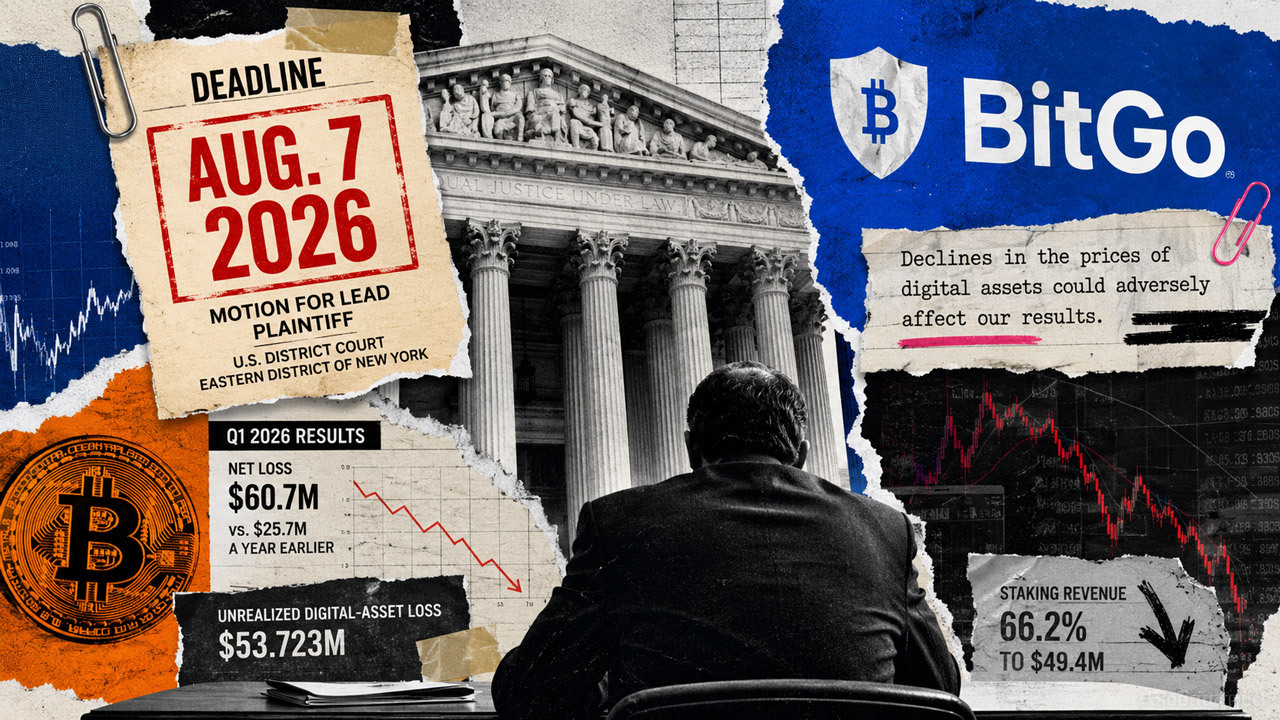
The Q1 loss confirms crypto-price exposure, while BitGo’s prospectus contains explicit warnings the lawsuit now challenges.

Crypto infrastructure firm Bitgo is replacing Layerzero with Chainlink as the exclusive cross-chain infrastructure provider for wrapped bitcoin (WBTC), marking a major change in how the $7.7 billion token will move across blockchain networks. The crypto company said on Tuesday all future Bitgo-issued digital assets will also use Chainlink’s Cross-Chain Interoperability Protocol, or CCIP, by […]

This integration enhances institutional confidence in onchain derivatives, balancing innovation with regulatory compliance and risk mitigation.
BitGo will move Wrapped Bitcoin and every future BitGo-issued asset onto Chainlink CCIP, dropping the provider it chose in September 2024. The announcement never uses the word LayerZero.

The partnership signifies a growing trend of traditional financial institutions embracing blockchain, potentially reshaping asset management.

The move pushes the total value migrating from LayerZero to Chainlink near $15 billion, with WBTC representing the largest shift yet.

BitGo has replaced LayerZero with Chainlink CCIP for $7.3 billion WBTC cross-chain transfers. According to CoinDesk, crypto infrastructure company BitGo has selected Chainlink’s Cross-Chain Interoperability Protocol (CCIP) as the exclusive cross-chain provider for Wrapped Bitcoin (WBTC), replacing LayerZero in a…

BitGo's exclusive use of Chainlink CCIP for WBTC could centralize cross-chain control, impacting DeFi liquidity and security dynamics.


BitGo launched Link to give institutions one dashboard for exchange balances, transfers, permissions and settlement across connected venues.